

You do not need a professional studio or an expensive guru sitting beside you to become a better singer. Some of the most celebrated vocalists in Indian music history—from Lata Mangeshkar to Arijit Singh—built their foundational skills through disciplined home practice long before they stepped into a recording booth.
Whether you are drawn to Hindustani classical ragas, Bollywood playback singing, or contemporary pop, learning how to improve your singing voice at home is not just possible—it is the single most important habit that separates hobbyists from serious musicians. This guide walks you through evidence-backed techniques, structured exercises, and practical routines that you can start today with nothing more than a tanpura app and a quiet room.
Master Breath Control: The Foundation of Every Good Voice
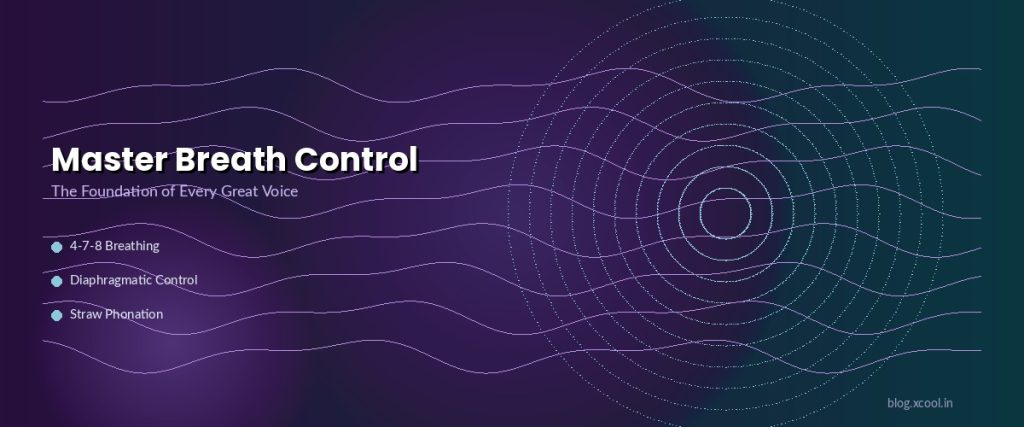
Before you sing a single note, learn to breathe correctly. Most untrained singers breathe from their chest, which creates shallow, unstable airflow. Professional singers use diaphragmatic breathing—drawing air deep into the belly so the diaphragm (not the shoulders or chest) does the work.
Try This at Home
- The 4-7-8 Exercise: Inhale through your nose for 4 counts, hold for 7, exhale through your mouth in a slow, controlled hiss for 8. Repeat 5 times. This builds the breath stamina needed for long phrases.
- Sustained Hissing: Take a deep diaphragmatic breath and release it as a steady “ssss” sound. Time yourself. Aim to extend from 15 seconds to 45 seconds over several weeks.
- Straw Phonation: Hum through a narrow straw into a glass of water. This semi-occluded vocal tract exercise reduces strain while building vocal cord coordination. It is a common tool among voice therapists and many singing coaches.”
Breath control directly impacts your ability to sustain notes, control dynamics (loud vs. soft), and sing extended phrases without gasping. There is no shortcut here—it requires daily, conscious practice.
Five Vocal Exercises You Can Do at Home Every Day
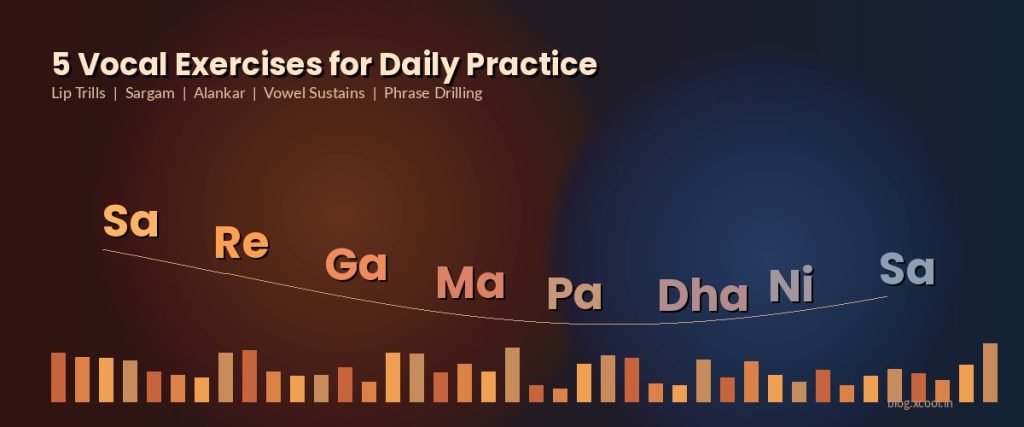
Structure matters more than duration. A focused 25-minute session using these exercises will outperform an hour of aimless singing along with Spotify.
- 1. Lip Trills (5 minutes): Blow air through loosely closed lips while humming a scale (Sa Re Ga Ma Pa Dha Ni Sa). Lip trills warm up the voice gently, reduce tension in the jaw and tongue, and help you navigate pitch transitions smoothly. Start from your comfortable middle range and slowly expand upward and downward.
- 2. Sargam Ascending and Descending (5 minutes): Sing the basic sargam (Sa Re Ga Ma Pa Dha Ni Sa) in aaroha (ascending) and avroha (descending) patterns. Use a tanpura drone app (Tanpura Droid, iTanpura) to keep a reference pitch. Focus on hitting each note cleanly—speed is irrelevant at this stage.
- 3. Alankar Patterns (5 minutes): Alankars are patterned note sequences (e.g., Sa Re Ga, Re Ga Ma, Ga Ma Pa…). They train your voice to move between notes with precision and fluency. Many Bollywood and playback singers with classical training rely on alankars as a core part of their daily riyaaz
- 4. Vowel Sustains (5 minutes): Hold each vowel sound (“Aa,” “Ee,” “Oo”) on a single note for as long as you can. Focus on keeping the tone steady—no wobble, no pitch drift. This develops tonal stability and resonance.
- 5. Song Phrase Practice (5 minutes): Pick one phrase from a song you are learning. Sing it repeatedly at a slow tempo, focusing on pitch accuracy, breath placement, and emotional delivery. Do not rush through entire songs; mastery comes from drilling small sections.
Training Your Ear: Pitch Accuracy Without a Harmonium
Pitch accuracy separates a pleasant voice from a trained one. And you do not need a harmonium or keyboard to train it at home.
- Use a Tanpura App: The continuous drone of Sa and Pa gives your ear a reference point. Sing against it daily, and over weeks your ear will start detecting even micro-deviations in pitch.
- Record and Review: Use your phone to record your practice sessions. Listening to yourself objectively—away from the vibration in your own head—reveals pitch errors you cannot hear in real time. This feedback loop is one of the most effective home training tools available.
- Interval Training Apps: Apps like Perfect Ear or Functional Ear Trainer quiz you on recognizing musical intervals. Over time, this sharpens your ability to jump between notes accurately.
The Power of Daily Riyaaz

In the Indian classical tradition,riyaaz (dedicated daily practice) is not optional—it is the practice itself. The great Ustad Amir Khan reportedly spent years perfecting just the meend (glide between notes) of a single raga before performing it publicly.
A realistic beginner’s riyaaz routine at home might look like this:
| Time Block | Activity | Focus Area |
| 0–5 min | Breathing exercises | Diaphragm activation |
| 5–10 min | Lip trills / humming | Vocal warm-up |
| 10–20 min | Sargam + Alankar | Pitch accuracy, note transitions |
| 20–30 min | Song phrase drilling | Application and expression |
| Last 2 min | Cool-down humming | Gentle vocal recovery |
For most learners, consistent 30‑minute daily practice tends to produce better and safer progress than occasional 2‑hour weekend sessions.
Common Mistakes That Damage Your Voice
Home practice without guidance can sometimes reinforce bad habits. Watch for these:
- Singing too loud: Volume is not the same as power. Pushing your voice to be loud strains the vocal cords. Focus on resonance and placement instead.
- Skipping warm-ups: Jumping straight into high notes or complex phrases without warming up is the vocal equivalent of sprinting without stretching. It leads to strain, hoarseness, and long-term damage.
- Imitating instead of understanding: Copying a singer’s style without understanding the underlying technique (breath support, note placement) creates a fragile imitation that collapses under pressure.
- Ignoring vocal rest: Your voice needs recovery time. If you feel hoarseness, scratchiness, or pain—stop and rest your voice, and if symptoms persist beyond a few days, consult an ENT or voice specialist. Repeatedly pushing through vocal fatigue increases the risk of nodules and other injuries.
When Self-Practice Is Not Enough
Home practice builds the foundation, but structured mentorship accelerates progress exponentially. A trained vocal coach identifies blind spots you cannot hear yourself—subtle pitch drifts, breath mismanagement, tonal imbalances—and provides corrective feedback in real time.
Platforms like Xcool connect you with experienced Hindustani and Carnatic vocal mentors through live online classes. For many learners, combining daily home riyaaz with regular guided instruction is one of the most effective ways to move from beginner to confident performer. Explore vocal courses on Xcool → xcool.in
Frequently Asked Questions
How long does it take to improve your singing voice at home?
Many beginners notice some improvement in pitch and breath control within 4–6 weeks of consistent 20–30 minute daily practice, and more noticeable tonal changes over 3–6 months, though this varies from person to person.
Can I learn singing at home without a teacher?
You can build foundational skills—breath control, pitch awareness, basic exercises—on your own. However, a teacher is essential for correcting technique errors you cannot self-diagnose. A hybrid approach (daily home practice + periodic coaching sessions) yields the best results.
What is the best time to practice singing at home?
Early morning (6–8 AM) is traditionally recommended in Indian classical music because the voice is rested and the environment is quiet. However, the best time is whichever slot you can commit to consistently every day.
Does drinking warm water help singing?
Yes. Warm (or room‑temperature) water supports overall hydration and can make your throat feel more comfortable, which many singers find helpful. Some people notice that very cold drinks, caffeine, or dairy make their throat feel tighter or more coated, so it is worth observing how your own voice responds.
Start Today
Your voice is a trainable instrument. Every professional singer you admire went through the same cycle of daily riyaaz, patient repetition, and incremental improvement. The difference between where you are now and where you want to be is measured in consistent practice days, not talent.
Open a tanpura app. Sit with good posture. Begin with breath. Sing your Sa. That is enough for today.





Leave a Reply